How Youth Exchanges Support Belt and Road People-to-People Bond

As Henry Ford famously observed, “Coming together is a beginning; keeping together is progress; working together is success.” This idea of working together helps drive a far-reaching international project. China’s Belt and Road Initiative (BRI) is designed to strengthen global connectivity. As of late 2023, it involved 151 countries. Collectively, these nations make up a substantial portion of global output and population.

This undertaking is expansive. It supports new railways, ports, and power systems. It further promotes smoother trade procedures and closer cultural relations. The goal is to drive trade, investment, and growth.

BRI Facilities Connectivity
Belt and Road People-to-People Bond
BRI Infographic

This report provides a close examination of how the BRI has evolved. We will analyze how its infrastructure push shapes international cooperation and development.

Key Takeaways

  • The Belt and Road Initiative (BRI) is a major Chinese strategy focused on global economic integration.
  • It spans 151 countries, representing a major share of world GDP and population.
  • The initiative centers on both hard infrastructure like transport and energy and soft infrastructure such as policy coordination.
  • A key aim is to increase international trade and investment across borders.
  • The initiative aims to promote growth and development across participating regions.
  • This analysis presents a comprehensive look at how the BRI prioritizes facilities connectivity.
  • Understanding this initiative is essential for recognizing changing patterns in global infrastructure and cooperation.

Introduction To The BRI’s Grand Vision

President Xi Jinping’s announcement that fall proposed reviving the spirit of ancient trade routes for the 21st century. He introduced the idea of jointly building the Silk Road Economic Belt and the 21st-Century Maritime Silk Road.

This was not conceived as a closed club. Rather, it reflects a new vision for collaboration among diverse countries and cultures.

These plans were officially set out by the Chinese government in a March 2015 document called “Vision and Actions on Jointly Building the Silk Road Economic Belt and the 21st-century Maritime Silk Road.” That document outlined the main priorities and operating mechanisms.

The full initiative is often portrayed by officials as a “public good” supplied by China. Its stated purpose is to promote shared development and mutual benefit for all participants.

A key mechanism is enhanced policy coordination. The bri aims to align national development plans to create synergy.

The broader geographic vision is expansive. It aims to link the dynamic East Asian economic circle with the developed European economic circle.

Doing so would accelerate the formation of an integrated Eurasian market. This foundational vision sets the stage for the initiative’s five key areas of cooperation.

Belt and Road Facilities Connectivity

From Ancient Caravans To Modern Corridors: Understanding The Historical Context

The story of transcontinental exchange did not begin in the 21st century but with the tread of camels along dusty trails. For more than two millennia, a vast network linked the major civilizations of Asia, Europe, and Africa.

That network formed the original silk road, a set of routes for commerce and cultural exchange. That legacy offers the historical foundation for today’s far-reaching international plans.

The Legacy Of The Silk Road

Goods like silk, spices, and porcelain moved along these routes. More importantly, ideas, religions, and technologies spread between East and West.

The ancient silk road was not a single highway. It was a complex web of land and sea connections.

Its lasting importance comes from the spirit it embodied. Historians speak of a “Silk Road spirit” of peace, cooperation, and mutual learning.

That spirit is viewed as a common historical inheritance. It highlighted openness and reciprocal gain among the societies involved.

That tradition of connection is what today’s frameworks attempt to restore. Ancient caravans have given way to a vision of high-speed rail and intelligent ports.

Xi Jinping’s 2013 Announcement And The BRI Framework Explained

During state visits in the fall of 2013, President Xi Jinping delivered pivotal addresses. In Kazakhstan, he proposed the creation of a Silk Road Economic Belt.

He later proposed a 21st Century Maritime Silk Road in Indonesia. Those paired declarations formally marked the start of the modern program.

These speeches deliberately drew on ancient silk traditions. They cast the initiative as a continuation of that historic spirit adapted to present-day needs.

The Silk Road Economic Belt focuses on overland corridors across Eurasia. The 21st Century Maritime Silk Road focuses on sea routes tying China to Southeast Asia, Africa, and Europe.

Together, they form the core of the broader framework. This framework converts a historical idea into a living foreign-policy agenda.

Its geographic reach soon stretched far beyond the original routes. It now spans more than 150 countries across several continents.

Areas such as South Asia and Central Asia remain major focal regions. The aim is to foster deeper regional cooperation and shared development.

So, this huge undertaking is not portrayed as something entirely new. Instead, it is presented as a revival and logical extension of a long tradition of international exchange.

Connectivity Pillars: Hard And Soft Infrastructure

Modern trade corridors depend on more than roads, steel, and concrete. They require both tangible infrastructure and intangible systems.

This dual framework helps define the global belt road initiative. The physical networks are useless without the rules to manage them.

Both sides must operate together. Their synergy is what produces genuine integration and mutual benefit.

Five Key Areas Of Cooperation

The Chinese government outlines a comprehensive strategy. This strategy is organized around five linked areas of cooperation.

  • Coordinated Policy: Aligning national development plans to create a unified vision.
  • Infrastructure Connectivity: Creating the core physical network of rail, road, and port infrastructure.
  • Barrier-Reduced Trade: Eliminating obstacles that slow the movement of goods and services.
  • Integrated Finance: Mobilizing capital and enabling cross-border financial services.
  • People-to-People Bonds: Fostering cultural and educational exchanges.

Together, these areas reflect the full scope of the bri. They push beyond basic construction toward deeper systemic integration.

Hard Infrastructure: Creating The Physical Network

This remains the most visible side of the initiative. It consists of large-scale engineering projects across multiple continents.

New rail links, highways, and pipelines form fresh channels for trade. Airports and ports become key nodes in a wider international system.

The need is enormous. The Asian Development Bank estimates that developing Asia by itself requires $26 trillion in infrastructure investment through 2030.

Chinese state-owned enterprises often lead these projects. They bring scale and speed to construction.

Their efforts are backed by major financial institutions. The China Development Bank and the Export-Import Bank of China supply vital financing.

Such financing makes major projects possible. It addresses a critical gap in global development finance.

Soft Infrastructure: Setting The Rules Of The Road

Physical networks require governance in order to function. Soft infrastructure builds the legal and financial framework needed for success.

The process starts with policy coordination. Nations harmonize customs procedures and technical standards.

That lowers delays and costs for businesses. Trade deals and investment agreements add security and predictability.

A central objective is more advanced financial integration. This often means promoting local-currency use in trade and investment.

Specialized funds reinforce this broader financial ecosystem. The $40 billion Silk Road Fund finances strategic projects.

The Asia Infrastructure Investment Bank (AIIB) mobilizes additional capital. It functions as a multilateral institution with members from around the world.

Together, these tools reduce transaction risks. They are meant to ensure infrastructure assets actually generate economic growth.

This soft layer turns concrete and rail into corridors of genuine cooperation. It is the critical software that allows development hardware to function effectively.

Connectivity Case Studies: Flagship Projects And Their Impact

Beyond maps and agreements, the story unfolds through steel, concrete, and dramatically changed travel times. Studying individual projects reveals how broad strategies are turned into reality.

These flagship undertakings show the scale and ambition of this international cooperation. At the same time, they expose the practical challenges of implementing initiatives on such a large scale.

We will look at three prominent examples. Each example highlights a different dimension of the wider vision for global connections.

The China-Pakistan Economic Corridor (CPEC): A Signature Megaproject

Often called the crown jewel of the broader framework, CPEC is a massive undertaking. It stretches approximately 3,000 kilometers from China’s Kashgar to Pakistan’s Gwadar Port.

This corridor is not one road, but rather a broad package of projects. It covers highways, railway lines, and optical fiber links.

Energy has received a significant portion of the investment. New power plants aim to solve Pakistan’s chronic electricity shortages.

The objective is to establish a modern transport and trade corridor. For China, it offers a more secure route to the Indian Ocean that avoids possible maritime chokepoints.

Pakistan is promised benefits such as major infrastructure upgrades and expanded economic growth. A central part of its appeal lies in its hoped-for impact on local development and job creation.

Gwadar Port Within The Maritime Silk Road

Gwadar is the maritime terminus of CPEC and a strategic linchpin. The port is operated under a long-term lease held by a Chinese company until 2059.

Its development is vital to the maritime side of the wider initiative. The broader vision is to develop it into a significant commercial center and naval-capable facility.

This port is intended to bridge the land-based and sea-based networks. It would connect the overland corridors of Central Asia with key shipping lanes.

However, progress has faced hurdles. Delays in construction and weak commercial activity have raised concerns.

Analysts watch Gwadar closely as a test case. Its success or failure will significantly influence the maritime strategy’s credibility.

The Jakarta-Bandung High-Speed Railway: Is It A Model Of Partnership?

Within Southeast Asia, Indonesia’s high-speed rail project is especially notable. This venture, worth $7.3 billion, officially launched in October 2023.

It serves as a showcase for Chinese high-speed rail technology overseas. Travel time between the two cities is reduced from roughly three hours to under one hour.

This railway is commonly cited as an example of bilateral cooperation. It was developed through a joint venture involving Indonesian and Chinese state-owned firms.

Yet, it also faced common challenges. Land acquisition problems and licensing issues delayed its completion.

The project’s ultimate impact will be judged through ridership levels and broader economic spillovers. It stands as a contemporary symbol of stronger regional connectivity.

Comparison Of Key BRI Projects

Project Title Region Key Features / Scope Main Goal Status / Notable Challenges
CPEC (China-Pakistan Economic Corridor) Pakistan Region A 3,000-km corridor featuring roads, railways, pipelines, and energy projects. Create a secure trade route from W. China to the Arabian Sea; stimulate Pakistani growth. In progress; faces security problems and questions over long-term financial viability.
Gwadar Port Development Gwadar In Pakistan Deep-sea port project featuring commercial capacity and possible naval facilities. Act as a strategic hub linking maritime and overland Silk Road routes. Operational but underutilized; slow commercial development and local tensions.
Jakarta-Bandung Rail Project Indonesia 142-km high-speed rail line reducing travel time significantly. Demonstrate technology while advancing regional integration and economic activity. Started operations in 2023; experienced major setbacks due to land acquisition issues.

These case studies reveal shared patterns. Big projects commonly run into financial, logistical, and political complexity.

Land acquisition, cost overruns, and debates about long-term viability are common. The investment brings physical assets but also creates new dependencies.

Host countries face genuine trade-offs. The potential for job creation and development is weighed against debt burdens and external influence.

Ultimately, these ventures provide tangible evidence of the bri‘s ambition. They materially reshape transport systems in developing countries.

They illustrate how capital is translated into concrete infrastructure. The broader goal is to deepen regional integration and trade.

The true measure of success will be whether these corridors generate sustainable, inclusive growth. The impact felt by local communities remains a central concern.

Weighing The Balance Sheet: Benefits And New Challenges

Evaluating the global initiative’s impact reveals a complex mix of economic promise and financial peril. The vast undertaking creates meaningful opportunities for many countries.

At the same time, it draws heavy scrutiny over its methods and long-term consequences. To understand it fully, a balanced perspective is essential.

Projected Economic Gains: Trade, Growth, And Development

Participating countries often seek faster economic progress. The program promises to deliver this through upgraded links.

New transport links and ports can sharply reduce trade costs. That increases the movement of goods across markets.

For China, the projects create overseas demand for its companies. They can use excess industrial capacity and capital.

This strategy helps internationalize the Chinese currency. It also helps secure critical energy supply corridors.

Partner countries receive modern infrastructure they may not otherwise be able to finance. Such improvements can draw in foreign direct investment.

New factories and industrial parks may follow. This is intended to generate employment and broader development.

Stronger transport networks connect remote areas more fully to the global economy. The promise of economic growth is a major attraction.

Debt Dilemmas And “Debt-Trap” Diplomacy Concerns

Large loans are often used to finance these ambitious projects. A number of host countries have constrained ability to repay those loans.

Examples like Sri Lanka and Zambia show how severe debt distress can emerge. Some analysts call this a strategic form of leverage.

A common criticism is that the terms of Chinese loans are not transparent enough. This may weigh on fragile economies for many years.

In the event of default, a government may have to surrender control over strategic assets. The port of Hambantota in Sri Lanka is a cited example.

This debate raises questions about the sustainability of the entire bri model. It also raises concerns about sovereign risk and financial dependency.

The impact on local populations can be severe if austerity measures follow. Debt sustainability has now become a central issue in negotiations.

Strategic Pushback And Geopolitical Skepticism

Not all nations welcome the expanding cooperation. To some observers, it appears to be a tool for projecting geopolitical power.

India rejects the China-Pakistan Economic Corridor outright. India points to sovereignty concerns involving the Kashmir region.

In Europe, Italy signaled its intention to leave the belt road initiative. The country had joined under a prior administration.

The United States and allied countries have urged caution. They have offered alternative infrastructure strategies for the developing world.

Participation at the 2023 road initiative forum indicated a decline in enthusiasm. Many leaders from Western and Asian countries were absent.

The growing skepticism increasingly shapes the contested position of the initiative in global politics. Strategic rivalry now defines much of its reception.

Balancing The Ledger: Benefits And Risks

Stakeholder Key Benefits Major Challenges And Risks Representative Examples
China Itself Fresh export markets; broader currency use; diversification of strategic trade routes. Reputational damage from debt controversies; geopolitical backlash. Deploying industrial overcapacity through overseas projects.
Participating Countries Development of infrastructure; new jobs; higher trade and investment flows. Debt pressure; possible asset-control losses; limited transparency in contracts. Hambantota Port in Sri Lanka; Zambia’s debt default.
Global Order Stronger international connectivity; reduced infrastructure deficits in developing regions. Rising geopolitical tension and bloc formation; worries about lending standards. G7-led alternatives, including the PGII, as a form of pushback.

The table above summarizes the dual narrative. Each advantage comes with a meaningful counterweight.

This tension now defines where the bri stands. The world watches how these projects evolve.

The following section examines how priorities are changing in response. A focus on sustainability and quality is emerging.

The Road Ahead: Changing Priorities And The “Green” BRI

The narrative around this major development program is being revised for changing global conditions. After a first decade focused on large-scale construction, strategic priorities are visibly shifting.

Current official papers place more emphasis on sustainability and innovation. This marks a major evolution in the program’s stated goals and methods.

Pivot From Megaprojects To Sustainable Development

A 2023 white paper issued by the Chinese government made this shift clear. It described a rebalancing away from traditional megaprojects.

The new focus areas are green development, digital links, and science and technology cooperation. The shift reflects both external criticism and China’s own internal economic recalibration.

The financial data highlights this change. New investment across partner nations declined to $68.3 billion in 2022.

That is well below the 2018 peak of $122.5 billion. The scale of engagement is becoming more selective.

The “High-Quality” BRI And New Global Initiatives

The idea of a “high-quality” belt road initiative has become central. President Xi Jinping used his 2023 forum speech to set out eight core commitments.

These commitments highlight building a multidimensional connectivity network. They also emphasize integrity-based cooperation.

The framework is now being integrated into China’s wider global agenda. This includes the Global Development, Security, and Civilization Initiatives.

New efforts like the Global AI Governance Initiative are also integrated. The aim is to create a cohesive suite of international policy tools.

The concept of facilities connectivity itself is being redefined. It now explicitly includes digital systems and sustainable infrastructure.

Strategic Focus Evolution

Strategic Focus Area Past Emphasis (First Decade) Evolving Focus (“Green” And High-Quality)
Primary Objective Fast construction of transport and energy infrastructure. Sustainable, financially viable, and technologically advanced systems.
Priority Sectors Highways, railways, ports, fossil fuel power plants. Renewable energy, digital corridors, scientific research parks.
Model Of Cooperation Project finance on a bilateral basis led mainly by Chinese contractors. More multilateral partnerships, technology transfer, and third-party market cooperation.
Commonly Reported Metrics Overall contract value and the count of major projects. Green investment share, digital inclusion, and local job skill development.

Long-Term Trajectory In A Shifting Global Context

This evolution is a response to a complicated global environment. China’s internal economic realities demand more efficient capital allocation.

External geopolitical pressure and concerns about debt sustainability also influence the future path. The program needs to prove that it delivers real benefits to participating partners.

Its long-term direction appears to favor a more adaptive and nuanced strategy. Success will rest on whether it can deliver shared growth while avoiding heavy financial burdens.

This pivot toward “green” and higher-quality development represents a practical adjustment. It seeks to ensure the initiative’s relevance and resilience for the coming decades.

Conclusion

As a central pillar of China’s foreign policy, the BRI seeks to reshape international relations through win-win cooperation. The true success of this long-term plan may take years to assess fully.

This analysis highlights the transformative potential of stronger global connectivity. It links the legacy of the ancient Silk Road with modern goals of economic integration.

The combined pillars of hard and soft infrastructure support trade, investment, and economic growth. Flagship projects show both immense scale and built-in complexity.

Today’s phase is shaped by a two-sided story of meaningful gains and substantial challenges. Future relevance will depend heavily on the increasing focus on sustainability and technology.

The initiative continues to be an enduring and adaptable force in global development. The full extent of its impact on world connectivity will emerge in the decades ahead.

Frequently Asked Questions

Q: What Is The Main Goal Of The Belt And Road Initiative?

A: The main goal is to increase global trade and economic growth through stronger policy coordination and major infrastructure spending. It aims to build a modern network of roads, railways, ports, and energy links, fostering deeper regional cooperation and financial integration across Asia, Africa, and Europe.

Q: How Is This Modern Initiative Connected To The Ancient Silk Road?

A: The modern vision takes direct inspiration from the ancient silk road and its historic trading networks. The current plan revives the concept for the modern era by promoting a silk road economic belt and a 21st century maritime silk road through contemporary partnerships and infrastructure projects.

Q: What Are The “Five Areas Of Cooperation” Under The BRI?

A: The framework focuses on five key areas: policy coordination, facilities connectivity, unimpeded trade, financial integration, and people-to-people bonds. The approach is broader than construction alone because it also works to align regulations, ease investment, and encourage cultural exchange in support of sustainable development.

Q: Can You Name A Major Flagship Project Under This Global Initiative?

A: One of the best-known flagship projects is the China-Pakistan Economic Corridor (CPEC). It channels billions in investment into transport links, energy projects, and the strategically important Gwadar Port. Its purpose is to support growth in Pakistan while strengthening connectivity for the wider maritime silk road.

Q: What Are Some Common Criticisms Or Concerns Regarding These Projects?

A: Key concerns include the potential for unsustainable debt in partner nations, often called “debt-trap diplomacy.” There is also geopolitical skepticism, with some nations viewing the infrastructure plans as a strategic push for influence. Critics also call for greater transparency and more serious attention to environmental and social consequences.

Q: How Is The Future Focus Of The BRI Changing?

A: Its direction is increasingly moving toward what officials describe as a “high-quality” and “Green BRI.” In practice, this means stronger attention to sustainable development, renewable energy, and digital connectivity rather than focusing solely on large construction projects. The long-term trajectory aims to align with global climate goals and foster more balanced international cooperation.

Wildlife Conservation as a Platform for People-to-People Bond

In Excess Of $1 trillion in projects linked to the belt and road initiative have transitioned from proposal to construction phases, illustrating the fast-changing nature of BRI finance in redefining cross-border investment and regional development landscapes.

BRI Facilities Connectivity

Financial Integration

Belt and Road People-to-People Bond

This discourse delves into the financial architecture, payment and settlement systems, and the array of funding channels—ranging from the Silk Road Fund to the Asian Infrastructure Investment Bank—that are connecting markets. We concentrate on the practical mechanisms supporting international financial cooperation and economic connectivity. The role of hubs such as the Greater Bay Area and platforms like CIPS and CNAPS in strengthening liquidity and RMB settlement is also explored.

Scholarly insights and policy declarations frame the belt and road initiative as a catalyst for improved development standards and reciprocal benefits. Concurrently, BRI finance raises concerns regarding regulatory alignment, cross-border risk management, and governance, which are critical for U.S. investors and policymakers examining global market integration.

Key Takeaways

  • BRI finance has supported large-scale international investment and infrastructure rollout.
  • Cross-border payment systems and settlement platforms sit at the core of international financial cooperation.
  • Economic connectivity is often advanced through regional hubs like the Greater Bay Area.
  • Diversified funding—multilateral banks and sovereign funds—underpins project finance.
  • Risk governance and regulatory coordination continue to be key obstacles to long-term integration.

Overview Of The Belt And Road Initiative And Financial Architecture

The belt and road initiative, launched in 2013, was designed to revive ancient trade routes, linking China’s modernization with global cooperation. It leverages the Silk Road’s legacy, striving to advance economic connectivity through transport, digital links, and capital flows. Policy documents underscore the importance of open, green, and clean cooperation, aligning BRI goals with the UN 2030 Agenda for Sustainable Development.

Belt and Road Facilities Connectivity

Historical And Policy Context

The silk road economic belt is rooted in the historical Silk Roads and maritime routes, establishing a profound narrative foundation. The 2023 white paper reaffirmed the principles of extensive consultation, joint contribution, and shared benefits. It frames BRI participation as non-exclusive, respecting national differences and promoting market-driven, business-led projects supported by government platforms.

Regional frameworks add institutional depth to the initiative. The Guangdong-Hong Kong-Macao Greater Bay Area Outline Development Plan creates pilot zones for cross-border financial innovation. Practical mechanisms such as Stock Connect and Bond Connect serve as templates for broader international financial cooperation and cross-border market access.

Core Financial Mechanisms Supporting BRI

The initiative’s financial architecture combines state-backed funds, multilateral banks, and payment systems to mobilize capital. Key actors include the Silk Road Fund, Asian Infrastructure Investment Bank, China Development Bank, and the Export-Import Bank of China. These institutions provide concessional lending, project finance, and co-financing for infrastructure and energy projects.

Cross-border payment platforms and pilot programs strengthen settlement and liquidity. Systems such as CIPS and offshore RMB corridors work alongside CNAPS and multilateral pilots like mBridge to improve transaction efficiency. These tools are central to bri finance, aiming to reduce friction in payments for cross-border trade and investment.

Regulatory pilots and connectivity projects support long-term economic connectivity. Wealth Management Connect and other pilot programs test capital flow liberalization while keeping risk controls in place. Together, these mechanisms form a layered financial architecture that underwrites BRI projects and promotes international financial cooperation.

Belt And Road Financial Integration

The Belt and Road Financial Integration initiative seeks to harmonize payments, funding, and regulatory frameworks across diverse jurisdictions. This endeavor focuses on the establishment of expedited cross-border payment systems, enhanced RMB settlement mechanisms, and the aggregation of capital from various multilateral and sovereign entities. Such measures are instrumental in translating trade, infrastructure, and cross-border investment plans into tangible, operational realities.

Cross-Border Payment And Settlement Infrastructure

Advancements in payment infrastructure, exemplified by the China National Advanced Payment System (CNAPS) and the Cross-Border Interbank Payment System (CIPS), significantly reduce settlement durations and associated costs for international trade. The development of offshore RMB payment corridors and initiatives like mBridge further enhance the efficiency of cross-border transactions, promising lower transaction fees and faster settlement times compared to traditional systems.

Enhanced settlement capabilities contribute to improved liquidity for both importers and exporters, facilitating broader cross-border payment flows aligned with the Belt and Road Financial Integration objectives. Digital payment platforms and regional fintech hubs play a critical role in bridging access and speed disparities, benefiting small and medium enterprises.

Capital Mobilization And Diversified Financing Channels

The financing landscape for infrastructure projects is diversified, incorporating contributions from policy banks, commercial lenders, and specialized funds to manage risk. The Silk Road Fund injects equity and project finance, complemented by the Asian Infrastructure Investment Bank’s provision of concessional debt and large-scale loans for environmentally sustainable projects.

Policy banks, such as the China Development Bank and the Export-Import Bank of China, bridge financing gaps where private capital is scarce. The introduction of innovative trade finance and cross-border investment products by private capital and fintech platforms expands the available resource pool.

Regulatory Coordination And Risk Management

Regulatory heterogeneity across countries poses significant challenges to cross-border finance. Initiatives aimed at harmonizing Anti-Money Laundering/Combating the Financing of Terrorism (AML/CFT) standards, sharing supervisory data, and adopting Environmental and Social Management Frameworks aim to mitigate legal and reputational risks for lenders and project sponsors.

The deployment of hedging instruments, standardized contractual terms, and centralized authorization for critical settlement systems aids in managing currency and interest-rate risks. Enhanced collaboration between host-country regulators and lenders is essential for ensuring the safe execution of projects under the Belt and Road Financial Integration framework.

Regional Hubs And Case Study: Greater Bay Area As A Financial Gateway

The Greater Bay Area is a unique amalgamation of port capacity, high-tech clusters, and global finance, positioning itself as a critical hub for Belt and Road finance. Its status as a financial gateway is underpinned by its maritime connectivity, open markets, and policies facilitating cross-border capital flows. This synergy enhances economic connectivity across Asia and beyond.

Geographic And Economic Significance

The GBA encompasses Guangdong Province, Hong Kong, and Macau, situated along the South China Sea. Its major ports handled over 78 million TEUs in 2021, solidifying its role as a logistics anchor for trade corridors. The region’s combined GDP neared $1.67 trillion in 2020, driven by Shenzhen’s tech sector and Hong Kong’s financial prowess.

These strengths foster deeper market integration with Southeast Asia and the globe. The region’s transport and trade capabilities position it as a natural hub for project finance and RMB liquidity, essential for Belt and Road initiatives.

Financial Ecosystem Strengths

Hong Kong boasts highly liquid capital markets, deep asset management expertise, and a robust legal framework. The HKEX and Shenzhen Stock Exchange offer complementary capital pools for equity and debt issuance.

Shenzhen’s fintech ecosystem, led by Tencent, and strong domestic capital formation are notable. Connectivity tools like Stock Connect, Bond Connect, and Wealth Management Connect facilitate cross-border distribution and structured finance tailored to infrastructure needs.

Growth Metrics And Projections

The financial sector’s share of regional GDP rose to about 23.4% in 2022 from 21.8% in 2019. Banking assets increased from RMB 29.8 trillion to RMB 33.4 trillion over the same period. Stock market capitalization expanded significantly, reflecting rising investor depth.

Mobile payment volumes reached RMB 29.2 trillion in 2020, indicating a broad base for digital finance and financial inclusion. PwC projected roughly 8.5% CAGR for the GBA financial industry through 2025, pointing to continued expansion in services supporting cross-border project structuring and risk management.

Measure 2019 Year 2022 Practical Implication
Banking assets in RMB RMB 29.8 trillion 33.4 trillion Improved balance-sheet strength for project loans
Stock market capitalization (RMB) RMB 47.4 trillion 62.1 trillion Improved financing depth and broader market integration
Financial sector share of GDP 21.8% share 23.4% Increasing regional specialization in finance
Mobile payment volume (RMB) 29.2 trillion RMB in 2020 Base for fintech-enabled inclusion

Policy initiatives such as the Outline Development Plan and Wealth Management Connect create pathways for increased economic connectivity and smoother market integration. Public and private investments in fintech and clearing infrastructure reinforce the GBA’s capacity to channel capital to Belt and Road projects.

The Greater Bay Area’s blend of global finance, digital innovation, and logistics positions it as a practical hub for advancing financial inclusion in project regions. Its capabilities support structuring, RMB settlement, and distribution of investment products that scale BRI finance across borders.

Impacts On Global Financial System And RMB Internationalization

The Belt and Road Initiative is transforming the global financial system by fostering closer market connections and reducing cross-border finance barriers. This initiative enhances capital flow, promotes market integration, and opens new avenues for trade finance. Such developments are redefining the dynamics of investment capital circulation across Asia, Africa, and Europe.

Market integration is catalyzing liquidity effects in interconnected exchanges and bond markets. Initiatives like Stock Connect and Bond Connect are expanding foreign investor access. This increased liquidity facilitates better price discovery and risk sharing. Yet, it also heightens the vulnerability to swift capital flow reversals, necessitating vigilant monitoring by policymakers.

The advancement of RMB internationalization is evident through the expansion of settlement rails along the Belt and Road. The establishment of systems like CIPS and offshore clearing hubs facilitates RMB settlement in trade and project finance. Digital initiatives, including central bank digital currency pilots and cross-border testing, aim to diminish payment frictions and foster currency diversification in invoicing and reserves.

The increasing utilization of RMB in trade settlements augments demand for RMB-denominated assets. This trend prompts banks and asset managers to develop local markets and instruments. Legal frameworks, regulatory alignment, and market depth are essential for transitioning from regional to broad international acceptance.

New multilateral institutions are playing a key role in this transition. The Asian Infrastructure Investment Bank (aiib) and the Silk Road Fund mobilize capital for large-scale projects, providing financing terms distinct from traditional lenders. Their actions foster international financial cooperation, encouraging co-financing arrangements with the World Bank, regional development banks, and private investors.

These institutions introduce innovative governance practices and sustainability criteria, influencing project standards. By pooling resources and providing diverse instruments, they facilitate long-term funding for infrastructure and energy. This supports deeper regional market integration and enhances liquidity resilience.

Risks, Challenges, And Governance Considerations For BRI Finance

The Belt and Road Initiative heralds unprecedented economic opportunities. Yet, it also engenders a complex array of financial risks necessitating meticulous governance. Stakeholders, from the Asian Infrastructure Investment Bank to national finance ministries, must meticulously balance project profitability against the risks of country exposure and market volatility.

Political And Sovereign Risk In Host Countries

Spanning diverse states with disparate institutional capacities and political stabilities, BRI projects are inherently susceptible to disruptions. Sudden policy shifts, elections, or weak legal frameworks can abruptly halt revenue streams, elevating sovereign risk for lenders and insurers. To mitigate these risks, entities like the Silk Road Fund employ diversified portfolios, conduct thorough risk assessments, and procure political risk insurance.

Private and public entities must undertake rigorous project-level due diligence. This includes scenario planning for contract renegotiations, debt-service stress tests, and ensuring alignment with local development priorities to diminish political risk.

Financial Market Stability And Contagion Concerns

The integration of cross-border markets heightens the risk of contagion. Exchange rate fluctuations, rapid capital reversals, or credit shocks in one market can swiftly spread to others, jeopardizing financial stability. Policymakers must bolster macroprudential tools, liquidity buffers, and currency risk management to counter these threats.

Hedging strategies, derivatives, and clear crisis-resolution protocols are instrumental in managing shocks. Enhanced regulatory coordination among central banks and supervisors is critical for effective crisis management and systemic risk mitigation.

Environmental, Social, And Governance (ESG) And Public Perception

Large-scale infrastructure projects often face opposition due to land disputes, environmental degradation, and local resistance, which can severely impact public perception and project viability. Entities such as the AIIB adhere to Environmental and Social Management Frameworks alongside transparent procurement practices to uphold ESG standards.

Engaging in robust community consultation, implementing anti-corruption measures, and conducting independent monitoring are essential for securing social license. Adherence to ESG principles not only reduces litigation risks but also fosters long-term investment returns for both investors and host communities.

Regulatory coordination, aml/cft, and technical standards

Divergent compliance regimes create operational challenges and vulnerabilities in anti-money laundering and combating the financing of terrorism (aml/cft). Multilateral information sharing and the adoption of harmonized technical standards are imperative to bridge these gaps. Centralized authorization models for cross-border settlement systems facilitate oversight and support consistent enforcement.

Area of Risk Key Challenge Mitigation Measures
Political and sovereign exposure Unstable policy conditions, debt distress Insurance, diversification, and careful project due diligence
Market contagion Exchange volatility, capital flight Macroprudential safeguards, foreign-exchange hedging, and liquidity support
Environmental/social governance and perception Local resistance and environmental harm Environmental and Social Management Frameworks, transparent procurement, and stakeholder engagement
Regulatory alignment and AML/CFT Fragmented rules and compliance weaknesses Cross-border regulatory coordination, information sharing, and harmonized standards
Institutional governance Weak oversight, corruption risk Anti-corruption measures, capacity building, and international cooperation

Conclusion

The Belt and Road Financial Integration merges payment systems like CIPS and CNAPS with digital innovations such as digital RMB and mBridge. It also incorporates a variety of funding sources, including the Asian Infrastructure Investment Bank and the Silk Road Fund. This integrated framework seeks to diminish transaction costs, facilitate capital mobilization for infrastructure, and enhance RMB’s global role. It also fosters international financial cooperation and inclusion.

Practical outcomes include expedited cross-border transactions, increased credit access for regional projects, and the advent of fintech solutions. These advancements are critical for regional development. Key players, such as policy banks, multilateral lenders, and gateways like the Greater Bay Area, enhance their capacity for large-scale, sustainable projects. This makes bri finance more effective for cross-border investments.

Conversely, the initiative necessitates a focus on governance and risk management. It is imperative to establish robust ESG standards, implement anti-corruption measures, and fortify AML/CFT frameworks. This is to mitigate sovereign, contagion, and reputational risks. For U.S. investors and policymakers, engaging transparently on standards and monitoring RMB settlement trends, AIIB portfolios, and regional hubs is vital. It will influence the evolving global financial architecture.

Related: How Youth Exchanges Support Belt and Road People-to-People Bond

BRI Policy Coordination Supporting Green Job Creation

As of mid-2025, over 150+ countries had formalised agreements tied to the Belt and Road Initiative. Cumulative contracts and investments topped approximately US$1.3 trillion. These figures point to China’s outsized role in global infrastructure development.

First rolled out by Xi Jinping in 2013, the BRI fuses the Silk Road Economic Belt and the 21st-Century Maritime Silk Road. It functions as a Belt and Road Cooperation Priorities pillar for strategic economic partnerships and geopolitical collaboration. It deploys institutions such as China Development Bank and the Asian Infrastructure Investment Bank to finance projects. These projects span roads, ports, railways, and logistics hubs across Asia, Europe, and Africa.

At the initiative’s core lies policy coordination. Beijing must coordinate central ministries, policy banks, and state-owned enterprises with host-country authorities. This includes negotiating international trade agreements while managing perceptions around influence and debt. This section explores how these coordination layers influence project selection, financing terms, and regulatory practices.

Belt and Road Cooperation Priorities

Main Takeaways

  • Given the BRI’s scale—over US$1.3 trillion in deals—policy coordination becomes a strategic priority for delivering outcomes.
  • Chinese policy banks and funds are core to financing, linking domestic planning to overseas projects.
  • Effective coordination means balancing host-country needs with international trade agreements and geopolitical concerns.
  • How institutions align influences timelines, environmental standards, and the scope for private-sector participation.
  • Understanding coordination mechanisms is critical to evaluating the BRI’s long-term global impact.

Origins, Expansion, And Worldwide Reach Of The Belt And Road Initiative

The Belt and Road Initiative was shaped from President Xi Jinping’s 2013 speeches, outlining the Silk Road Economic Belt and the 21st-Century Maritime Silk Road. Its aim was to strengthen connectivity through infrastructure across land and sea. Early priorities centred on ports, railways, roads, and pipelines designed to boost trade and market integration.

The initiative’s backbone is the National Development and Reform Commission and a Leading Group, linking the Ministry of Commerce and the Ministry of Foreign Affairs. China Development Bank and China Exim Bank, along with the Silk Road Fund and AIIB, finance projects. State-owned enterprises, including COSCO and China Railway Group, execute many contracts.

Analysts often frame the Belt and Road Policy Coordination as combining economic statecraft with strategic partnerships. It aims to globalize Chinese industry and currency, expanding China’s soft power. This lens underscores how policy alignment supports project goals, as ministries, banks, and SOEs coordinate to advance foreign-policy objectives.

Development phases outline the initiative’s evolution from 2013 to 2025. The first phase, 2013–2016, focused on megaprojects like the Mombasa–Nairobi SGR and the Ethiopia–Djibouti Railway, financed mainly by Exim and CDB. The 2017–2019 period brought rapid growth, marked by port deals and intensifying scrutiny.

Between 2020 and 2022, pandemic disruption drove a shift toward smaller, greener, and digital projects. By 2023–2025, rhetoric leaned toward /”high-quality/” green projects, while many deals still prioritised energy and resources. This highlights the gap between stated goals and market realities.

Participation figures and geographic spread illustrate the initiative’s evolving reach. By mid-2025, around 150 countries had signed MoUs. Africa and Central Asia emerged as top destinations, moving ahead of Southeast Asia. Kazakhstan, Thailand, and Egypt ranked among leading recipients, while the Middle East saw a 2024 surge driven by large energy deals.

Metric 2016 High 2021 Low By Mid-2025
Overseas lending (approx.) US$90bn US$5bn Renewed activity: US$57.1bn investment (6 months)
Construction contracts (6 months) US$66.2bn
Participating countries (MoUs) 120+ 130+ ~150
Sector split (flagship sample) Transport 43% Energy: 36% Other: 21%
Cumulative engagements (estimate) ~US$1.308tn

Regional connectivity programs stretch across Afro-Eurasia and extend into Latin America. Transport projects remain dominant, while energy deals have surged in recent years. Participation statistics reveal regional and country size disparities, influencing debates on geoeconomic competition with the United States and its partners.

The Belt and Road Initiative is a long-term project, aiming to extend beyond 2025. That mix of institutions, funding, and partnerships makes it a focal point in discussions about global infrastructure and changing international economic influence.

Policy Coordination In The Belt And Road

The coordination of the BRI Facilities Connectivity merges Beijing’s central-local coordination with on-the-ground arrangements in partner states. Beijing’s Leading Group and the National Development and Reform Commission collaborate with the Ministry of Commerce and China Exim Bank. This helps keep finance, trade, and diplomacy aligned. On the ground, teams from COSCO, China Communications Construction Company, and China Railway Group implement cross-border initiatives with host ministries.

How Chinese Central Bodies Coordinate With Host-Country Authorities

Formal tools include memoranda of understanding, bilateral loan and concession agreements, plus joint ventures. These shape procurement and dispute-resolution venues. Central ministries set overarching priorities, while provincial agencies and state-owned enterprises manage delivery. Through central-local coordination, Beijing can pair diplomatic influence with policy tools and financing from policy banks and the Silk Road Fund.

Host governments negotiate local-content rules, labor terms, and regulatory approvals. In many deals, a single partner-country ministry functions as the primary counterpart. Yet, project documents can route disputes to arbitration clauses favoring Chinese or international forums, depending on the deal.

Aligning Policy With International Partners And Alternative Initiatives

With evolving project design, China more often involves multilateral development banks and creditors for co-financing and international partner acceptance. Co-led restructurings and MDB participation have grown, changing deal terms and oversight. Strategic economic partnerships now coexist with competing offers from PGII and the Global Gateway, increasing host-state bargaining power.

G7, EU, and Japanese initiatives push for higher transparency and reciprocity standards. This pressure encourages policy alignment on procurement rules and debt treatment. Some countries leverage parallel offers to secure improved financing terms and stronger governance commitments.

Regulatory Shifts And ESG/Green Guidance At Home

China’s Green Development Guidance introduced a traffic-light taxonomy that labels high-pollution projects red and discourages new coal financing. Domestic regulatory shifts require environmental and social impact assessments for overseas lenders and insurers. This lifts expectations around sustainable development projects.

Project-by-project, ESG guidance adoption varies. Renewables, digital, and health projects have grown under the green BRI push. At the same time, resource and fossil-fuel deals have persisted, showing gaps between rhetoric and practice in environmental governance.

For host countries and partners, clear ESG and procurement standards strengthen project bankability. Mixing public, private, and multilateral finance helps make smaller co-financed projects more deliverable. This shift is vital to long-term policy alignment and resilient strategic economic partnerships.

Funding, Delivery Outcomes, And Risk Management

BRI projects are supported by a complex funding structure, combining policy banks, state funds, and market sources. China Development Bank and China Exim Bank are major contributors, alongside the Silk Road Fund, AIIB, and New Development Bank. Recent trends suggest movement toward project finance, syndicated loans, equity stakes, and local-currency bond issuances. The aim of this diversification is to reduce direct sovereign exposure.

Private-sector participation is increasing through Special Purpose Vehicles (SPVs), corporate equity, and Public-Private Partnerships (PPPs). Contractors including China Communications Construction Company and China Railway Group often underpin these structures to reduce sovereign risk. Commercial insurers and banks collaborate with policy lenders in syndicated deals, exemplified by the US$975m Chancay port project loan.

The project pipeline saw significant changes in 2024–2025, with a surge in construction contracts and investments. Today’s pipeline features a diverse sector mix: transport leads by count, energy by value, and digital infrastructure—such as 5G and data centres—spans multiple countries.

Delivery performance differs widely across projects. Flagship projects frequently see delays and overruns, including the Mombasa–Nairobi SGR and Jakarta–Bandung HSR. In contrast, smaller, local projects tend to have higher completion rates and quicker benefits for host communities.

Debt sustainability is central to restructuring discussions and the development of new mitigation tools. Beijing has engaged in the Common Framework and bilateral negotiations, participating in MDB co-financing on select deals. Mitigation tools include maturity extensions, debt-for-nature swaps, asset-for-equity exchanges, and revenue-linked lending to ease fiscal burdens.

Restructurings require a balance between creditor coordination and market credibility. China’s involvement in the Zambia restructuring and its maturity extensions for Ethiopia and Pakistan demonstrate pragmatic approaches. These strategies aim to preserve project finance viability while protecting sovereign balance sheets.

Operational risks stem from cost overruns, low utilisation, and compliance gaps. Certain rail links fall short on freight volumes, and labour or environmental disputes can bring projects to a halt. Such issues affect completion rates and heighten worries about long-term investment returns.

Geopolitical risks can complicate deal-making through national security reviews and changing diplomatic positions. Foreign-investment screening by the U.S. and EU, along with sanctions and selective cancellations, increases uncertainty. The 2025 withdrawal by Panama and Italy’s earlier exit illustrate how political shifts can reshape project prospects.

Mitigation approaches include contract design, diversified funding, and multilateral co-financing. Tighter procurement rules, ESG screening, and more private capital aim to lower operational risk and improve debt sustainability. Blended finance and MDB co-financing are essential for scaling projects while limiting systemic exposure.

Regional Outcomes And Policy Coordination Case Studies

China’s overseas projects now shape trade corridors from Africa to Europe and from the Middle East to Latin America. Policy coordination matters where financing, local rules, and political conditions intersect. This section examines on-the-ground dynamics in three regions and the implications for investors and host governments.

Africa and Central Asia rose to the top by mid-2025, driven by roads, railways, ports, hydropower, and telecoms. Projects such as Kenya’s Standard Gauge Railway and the Ethiopia–Djibouti line illustrate how regional connectivity programs target trade corridors and resource flows.

Resource dynamics shape deal terms. Large loans often follow energy and mining projects in Kazakhstan and regional commodity exports. China is a major creditor in several countries, prompting restructuring talks in Zambia and co-led restructurings in 2023.

Policy coordination lessons point to co-financing, smaller contracts, and local procurement as ways to reduce fiscal strain. Enhanced environmental and social safeguards boost acceptance and lower delivery risk.

Europe: ports, railways, and rising pushback.

In Europe, investments concentrated in strategic logistics hubs and manufacturing. COSCO’s rise at Piraeus transformed the port into an eastern Mediterranean gateway while triggering scrutiny over security and labor standards.

Rail projects such as the Belgrade–Budapest corridor and upgrades in Hungary and Poland show how railways re-route freight toward Asia. European institutions reacted with FDI screening and alternative co-financing through the European Investment Bank and EBRD.

Pushback is driven by national-security concerns and calls for stronger procurement transparency. Joint financing and stricter oversight help reconcile connectivity goals with political sensitivities.

Middle East and Latin America: energy investments and logistics hubs.

The Middle East experienced a surge in energy deals and industrial cooperation, with major refinery and green-energy contracts concentrated in Gulf states. These projects often link to resource-backed financing and sovereign partners.

In Latin America, marquee projects continued even as overall flows declined. The Chancay port in Peru is a standout deep-water logistics hub that should shorten shipping times to Asia and serve copper and soy supply chains.

Each region must contend with political shifts and commodity-price volatility that influence project viability. Coordinated risk-sharing, alignment with host-country development plans, and clearer procurement rules can manage these uncertainties.

Across regions, practical policy coordination favors tailored local models, transparent contracts, and blended finance. Such approaches create space for private firms, including U.S. service providers, to support upgraded ports, logistics hubs and associated supply chains.

Closing Thoughts

The Belt and Road Policy Coordination era is set to shape infrastructure and finance from 2025 to 2030. A best-case scenario foresees successful debt restructuring, increased co-financing with multilateral banks, and a focus on green and digital projects. The base case remains mixed, expecting steady progress alongside fossil-fuel deals and selective project withdrawals. Risks on the downside include weaker Chinese growth, commodity-price volatility, and geopolitical tensions that trigger cancellations.

Academic analysis suggests the Belt and Road Initiative is reshaping global economic relationships and competition. Long-term success hinges on robust governance, transparency, and debt management. Effective policies require Beijing to balance central planning with market-based financing, enhance ESG compliance, and engage more deeply with multilateral bodies. Host governments must advocate for open procurement, sustainable terms, and diversified funding to mitigate risks.

For U.S. policymakers and investors, clear practical actions emerge. They should engage through transparent co-financing, promote higher ESG and procurement standards, and monitor dual-use risks and national-security concerns. Investment strategies should prioritise building local capacity and designing resilient projects aligned with sustainable development and strategic partnerships.

The Belt and Road Policy Coordination is widely viewed as an evolving framework linking infrastructure, diplomacy, and finance. A prudent approach combines risk vigilance with active cooperation to foster sustainable growth, accountable governance, and mutually beneficial partnerships.

China Europe Railway Express And EU Regulations

Reimagining Trade Pathways: China Europe Railway Express

In fewer than ten years, the China Europe railway express has made many thousands of trips between Asia and Europe. It began in 2011 and has turned into a major disruptor in international cargo shipping. This route links Asian production hubs to European consumers in record time. It forms a core part of the Belt and Road initiative, ensuring stable delivery schedules and dependable transit.

The China to Europe freight train offers an efficient path for cross-border trade. It allows firms to respond to increasing customer needs. Such benefits are crucial in the current fast-moving global economy.

Shippers depend on rail networks for quick goods movement and cost savings. The China to Europe freight train is a unique solution for long-haul logistics. It is central to China’s push to grow its trade pathways. It paves the way for consistent deliveries throughout numerous countries.

  • Train services accelerate shipment times from Asia to Europe
  • Stable freight paths support better inventory planning for businesses
  • The Belt and Road vision drives stronger trade ties
  • International logistics benefit from both faster transit and lower costs
  • Firms gain access to an efficient channel for bulk export–import activity

Getting to Know the Expanding Worldwide Trade Network

Ongoing globalization encourages countries and companies to secure dependable shipping routes over long distances. The China Europe Express train is a key part of the Belt and Road initiative. It links Asian markets with Western economies, helping industries access faster routes and reduce emissions.

China to Europe freight train

How China Shapes Cross-Border Connectivity

China is pouring substantial investment into rail systems, tightening its connections with global markets. This China–Europe rail service has surpassed 100,000 train runs, transporting upwards of 11 million TEUs with a value beyond $420 billion. This achievement creates new trade paths, strengthening shipping competitiveness while promoting greener growth.

Opportunities for Western Markets

Firms across Western economies reap rewards from this expanding trade network. They experience reduced transit durations, more stable supply chains, and a smaller environmental footprint. This network offers a smart choice for companies looking to expand into new markets.

Origins and Objectives of the Belt and Road Initiative

Through the China’s BRI videos Initiative, new commercial routes are being forged spanning Asia, Europe, and other regions. It seeks to reduce transport costs while granting access to new sales regions for producers and traders. This plan integrates road, maritime, and rail networks, driving infrastructure growth and fostering international cooperation.

The China railway express proves to be an essential element of streamlined freight services. Its priorities include funding advanced rail technology, upgrading customs procedures, and building strategic corridors. This strengthens the relationship between factories in the East and buyers in the West. It further results in smoother shipping operations and stimulates local economies with fresh business prospects.

China Europe Railway Express: Transforming Transcontinental Logistics

Newly established freight-only rail corridors have introduced fresh possibilities for global trade. Firms increasingly seek accelerated shipments and improved intercontinental links. This initiative cuts down on unpredictable transit delays, revolutionizing the movement of goods between Asia and Europe.

Helping Chinese Enterprises Reach European Markets

Chinese manufacturers secure an advantage by accessing key European destinations. Links such as Chongqing to Duisburg illustrate that goods like electronics and vehicle parts reach Europe in roughly half the time compared with sea routes. Thanks to fixed schedules, companies can plan shipments more accurately, maintaining a strong position in demanding markets.

Improving Cross-Border Efficiency

Upgraded customs procedures and fixed departure times simplify long-haul logistics. The shift results in shorter lead times and steadier logistics networks for businesses. Cargo owners profit from more seamless coordination using consolidation services and multimodal transfers. The China railway express to Europe becomes a major asset, connecting factories to distribution hubs for rapid trade.

Unraveling the China to Europe Freight Train Advantages

For firms needing speedier transport, the China to Europe rail service offers a strong alternative. It fills the gap between slower ocean trips and expensive air freight. The Belt and Road initiative is driving growth in trade corridors, enabling the fast transport of goods like electronics, vehicles, and raw materials to Europe.

Rail travel takes about 12–18 days, making it faster than ocean shipping. This pace is highly appealing for firms that must deliver quickly to keep customers satisfied. It supports consistent growth for manufacturers who want stable cross-border supply chains.

Shorter Transit Times

Shorter journeys mean quicker order fulfillment. Such time savings support companies of all sizes by shrinking the gap between orders and replenishment.

Budget-Friendly Freight Forwarding Options

Rail shipping costs roughly one-fifth of comparable air freight. It offers a financially efficient approach while preserving product standards. Under the Belt and Road initiative, stronger partnerships and improved infrastructure are simplifying cross-continental commerce.

Why the China Railway Express to Europe Matters

The China–Europe Express train stands as a cornerstone of China’s Belt and Road initiative. It links manufacturers in Asia with importers in Europe, becoming crucial for handling sizable consignments. Covering 25 countries and over 50,000 kinds of goods, it offers trusted capacity for distribution networks.

For big corporations, it provides a time-saving, environmentally friendlier option compared with conventional shipping. This corridor strengthens supply chain resilience, enabling improved inventory planning and fulfilling rising customer demand. It functions as a major actor in international freight transport, cutting dependence on crowded routes.

  • Time-sensitive deliveries that boost retail readiness
  • Reduced carbon impact for sustainable growth
  • More reliable stock planning for diverse sectors

European businesses now see new opportunities with the China Railway Express. Its predictable routes and stable capacity open up new markets. This collaboration fortifies trade relations and shields logistics from worldwide disruptions.

Eurasian Rail Routes and Cross-Border Expansion

The Belt and Road strategy from China builds fresh pathways tying production centers to high-growth markets. This far-reaching network spans ports, highways, and inland terminals. It offers various routes that cut down transit times and enhance trade. This synergy boosts rail logistics, prompting companies to seek out quicker cargo options.

Important corridors including Xi’an to Hamburg and Chengdu to Lodz widen international reach for items such as electronics, garments, and industrial machinery. Shipments pass through coordinated networks that blend truck, barge, and train transport. This strategy lowers overall transport costs and supports greener logistics.

Key Intermodal Transportation Hubs

Places like Xi’an in China and Hamburg in Germany serve as central hubs for diverse goods. These hubs speed up distribution, integrate digital tracking, and solve congestion issues.

Hub Location Key Commodities Connectivity Advantage
Xi’an China Electronics, Apparel Robust East-West Links
Hamburg Germany Machinery, Automotive Parts Port Integration
Chengdu China Textiles, Consumer Goods Rail-Road Collaboration
Lodz Poland Various Industrial Products Strategic EU Entry Point

Effects on European Supply Chains

Producers gain from lower costs and quicker deliveries, enabling broad distribution across European markets. Such rail momentum supports Europe’s push toward greener logistics. It further unlocks viable routes for sustained trade expansion.

How Rail Logistics Strengthens International Trade

The China–Europe Express train, an important element of the Belt and Road initiative, is reshaping freight choices. It establishes cross-border connectivity, ensuring goods move smoothly between major markets. High-capacity trains enable a constant flow of goods, backing ongoing shipments and satisfying rising consumer demand.

Advanced document submission simplifies customs clearance in many countries. This optimization refines customs procedures, granting firms shorter clearance times and less friction. Live tracking systems increase visibility, allowing cargo owners to follow each key movement.

  • Faster border checks supported by secure electronic documents
  • Regular freight timetables that support stable inventory planning
  • Efficient logistics that suit the needs of tech-focused sectors

These advancements enhance cross-border connectivity while keeping costs down and meeting tight deadlines. It’s now easier to access global markets without compromising on quality or reliability. Rail-based logistics is transforming international trade, helping many industries and customer groups.

Challenges and Outlook for Worldwide Trade Links

Trade corridors continue to grow through new rail connections that join far-flung markets. The China–Europe Express rail service, as a component of the China Belt and Road initiative, is redefining global cargo flows. Checkpoints on Eurasian corridors must coordinate more closely to minimize waiting times and cope with increased demand.

Infrastructure Improvements for Long-Term Growth

Varying rail gauges make transshipment at nodes such as Alashankou necessary, which affects transit duration. This transition demands more robust facilities and tracking systems to keep operations on schedule. Using the 95306 freight platform enhances transparency and assists in relieving congestion during cargo handoffs.

On-time infrastructure projects and upgraded corridors ignite new chances for quicker, greener logistics.

Deepening Cooperation with Belt and Road Enterprises from China

International agreements foster trust between shippers and participating countries. Collaborative work targets predictable customs frameworks and modern tools to make long-distance logistics smoother. Robust cooperation with Chinese Enterprise news helps improve service quality and delivers more integrated shipping experiences on Eurasian rail corridors.

This depth of cooperation lays the groundwork for steady progress and long-term trade advantages.

Common Transport Hurdles Potential Solutions
Varying Rail Gauges Upgraded Transshipment Points
Time Delays at Borders Digital Freight Platforms
Limited Cross-Border Coordination Unified Customs Agreements

The Importance of Transcontinental Railway Service Today

In our highly connected era, long-distance rail routes are vital for firms seeking reliable freight solutions. This China Europe Express network forms one pillar of the China Belt and Road program. It helps ensure efficient movement of cargo across multiple countries. According to Michael Schumann of the German Federal Association for Economic Development and Foreign Trade, it acts as a vital artery in worldwide supply chains. It strengthens reliability and robustness in international trade flows, including during periods of disruption. European trade groups praise its consistent performance, even amid port congestion.

Building More Diverse Supply Chains

Shippers benefit from a balanced approach to freight options. This method reduces reliance on single transport modes. It unlocks new opportunities for companies to reach a wider global network. Balancing cost, transit time, and goods protection helps firms remain competitive in shifting conditions.

Managing Regulatory Requirements

Regulatory customs requirements and packaging standards can slow or halt shipments. Well-defined rules and aligned processes streamline moves across borders. Businesses gain confidence by working with rail operators who streamline compliance. This promotes steady growth in various industries.

Advantage Outcome
Reliable Schedules Predictable transit times boost customer satisfaction
Expanded Reach Greater access for smaller exporters and importers

Innovations and Technological Advancements in Rail Freight

Technological advances in the digital realm are unlocking fresh paths for international trade. This China Europe Express service under the Belt and Road framework demonstrates how modern tools can transform logistics. It increases efficiency across long-distance routes. Automated inspection systems at border points improve accuracy and cut waiting times.

Advanced freight scheduling also plays a key role. It minimizes gridlock on busy routes, ensuring smooth shipment flow. These advancements highlight the importance of a future-ready system for timely deliveries.

Contemporary transcontinental railway service utilizes digital platforms such as 95306. They deliver live tracking of containers and simplified customs pre-approval. Shippers can track their cargo and adjust plans if delays occur. These enhancements stress the importance of a system designed for timely and predictable deliveries.

  • Electronic customs workflows enabling faster entry
  • Automated border inspections that reduce bottlenecks
  • Scheduling tools that optimize train paths

This transcontinental railway service revolutionizes traditional shipping. It builds trust in a network designed for growth and resilience. Global traders benefit from expanded connectivity and continuous innovation.

Summary

As a major element of the Belt and Road Initiative, the China-Europe Railway Express has completed more than 100,000 runs. It has moved merchandise exceeding $420 billion in value. This line ties together key markets, advances eco-friendly logistics, and helps guarantee safe, on-time arrivals.

It functions as a strategic connector uniting Asia and Europe. By linking key trade hubs, it offers effective freight forwarding solutions and supports intermodal transportation. Businesses benefit from reduced transit times and lower costs.

Updated infrastructure and aligned processes increase overall dependability. This turns the line into a reliable choice for international shipping. Strong partnerships across continents suggest further growth is on the horizon.

Innovative technology and consistent upgrades are driving new possibilities in commerce. This railway system stays at the core of an expanding trade framework. It is shaping an era of steady progress, forging global ties.

Industrial & Warehouse Racking Singapore Tender And Bid Strategy

Shelving Units vs Racking Systems: What’s Best for Storage

In a Singapore facility, what works better for space and budget—shelf units or racking systems?

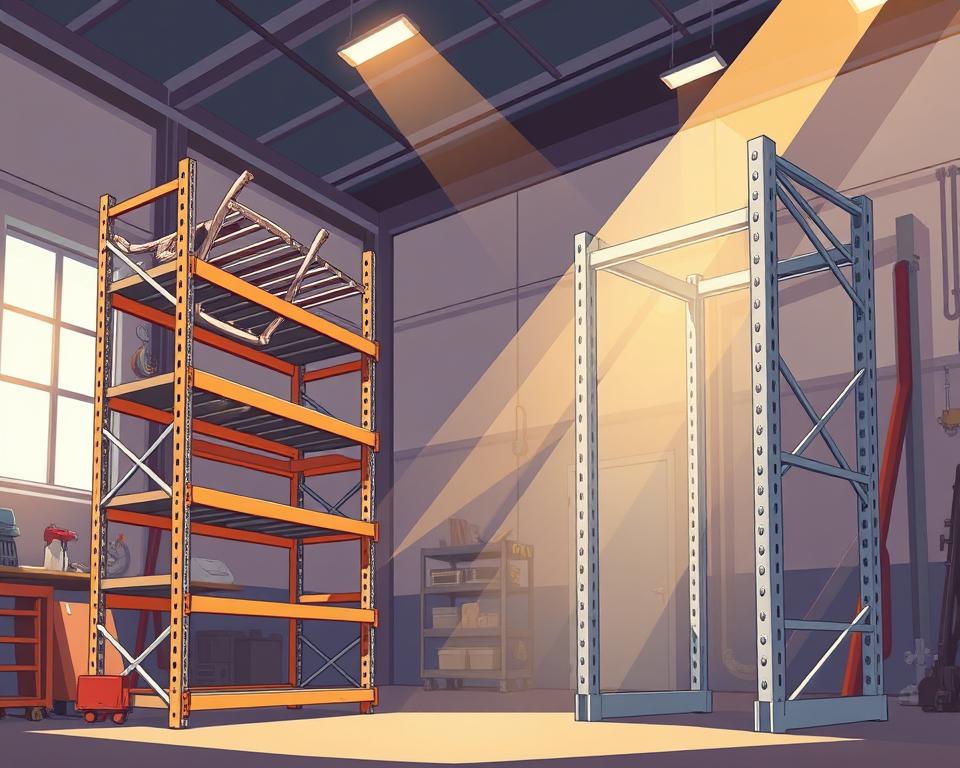
Use this guide to decide between shelving and racking for your operations. Shelving units suit manual picking, lighter loads, and frequent access. On the other hand, racking systems are designed for palletised, heavy loads moved by forklifts. They build higher to expand vertical space.

Consider capacity and footprint: shelving units can support up to 2,000 lbs per shelf in industrial-grade formats. Depth is typically under 30 inches. Racking systems, in contrast, support pallet loads of 1,000+ lbs and deeper layouts. They https://www.ntlstorage.com/used-racking-systems-vs-new-purchase-complete-guide/ include floor-anchored uprights and beams for secure, dense storage.

This decision affects workflow, equipment needs, costs, and local regulations and hygiene standards in Singapore. Expect shelving units at about $100–$500 each. Racking often ranges $300–$1,500+ per bay and may require installers. Use this guide to match rack or shelf solutions to your inventory and available space.

Quick Takeaways

  • Shelving fits light loads, fast picks, and compact footprints.
  • Use racking for pallets, heavier weights, and vertical density.
  • Let weight, depth, and access define which system fits your workflow.
  • Costs vary: shelving is lower upfront; racking often needs installation and equipment investment.
  • Consider Singapore’s vertical limits, sanitation, and codes when choosing.

NTL Storage

Shelving Units vs Racking Systems

Deciding between shelving units and racking systems is important for space efficiency. Below are the core differences and what they mean for Singapore operations.

How They Function Differently

Shelving targets piece and small-carton picking. They support lighter loads and provide easy access for frequent picking. Typically, they have solid or wire decks, with depths under 30 inches, making them perfect for manual workflows.

Racking systems, on the other hand, are built to handle pallet loads and are accessed using forklifts or pallet jacks. Expect deeper bays (>30 inches) and floor anchoring. Beams transfer load to uprights, so decking and ratings are critical for safety.

Capacities differ widely. Industrial shelving reaches ~2,000 lbs per shelf. In contrast, racking systems can support 1,000+ lbs per pallet and for multi-pallet stacks. Mesh decks carry thousands; solid/perforated decks may support higher.

Why the choice matters for your operations

Space efficiency matters. Singapore sites often underuse vertical height. Racking systems unlock this vertical volume, increasing usable space per square foot. Extra density can balance initial costs.

Workflow and productivity are also influenced by your choice. Shelving supports quick manual picks and merchandising. Racking formats reduce travel time and improve pick rates.

Safety and compliance vary by system. Racking systems require scheduled inspections, bolt retorquing, protective guards, and adherence to standards like ANSI MH16.1. Shelving units need visual checks and simpler anchoring, but following manufacturer guidelines is essential for both industrial shelving and storage racks.

Costs matter. Shelving has lower install costs for modest density. Racking costs more upfront but can deliver better long-term ROI via vertical density, improved workflow, and efficiency.

Shelving Types and Use Cases

Select shelving based on material, capacity, and space. In Singapore, rental rates necessitate balancing density with accessibility. This text guides you through common shelving materials, popular systems, and layout tips. It aligns shelving choices with daily operations.

Common Materials

Steel shelving is common in stockrooms/garages. It handles manual loads, fits light-industrial needs, and is durable/cost-effective.

Aluminium shelves are light and resist corrosion. It’s suited to food prep, medical spaces, or server rooms where temp/humidity matter for NTL Storage.

Plastic and wire shelving excel in environments requiring hygiene and airflow. Wire improves airflow/visibility and can meet food/medical grades.

For humidity/corrosion common in Singapore, choose stainless or epoxy.

Popular shelving systems and ideal applications

  • Boltless (rivet) shelving: quick to assemble, scalable, and common in warehouses. Single rivet units handle lighter loads; double rivet setups manage much higher per-shelf weights.
  • Gondola: for retail display and easy customer access. Easily reconfigure for seasonal plans.
  • Mobile and multi-tier shelving: compress aisles to increase density in archives, labs, and clinics. Mobile units are ideal when you need hand access but limited floor area.
  • Bin/carton shelving supports small-parts picking. Use shallow depths and tote systems for efficient order fulfilment.

Capacity, dimensions, and layout tips

Parameter Range Best For
Shelf depth 12″–24″ Manual picks for small items
Width 24″–42″ (60″ long-span max) Bins, long items, bulk storage
Adjustable height 21″–54″ Ergonomic reach and variable inventory sizes
Load per shelf (typical) ~350 lbs single to 1,600–2,000 lbs double General stockroom to heavier light-industrial use

Measure your item footprint and height before buying shelving units. Ensure aisle clearance and store fast movers within ergonomic reach.

Choose wire decking or solid panels based on sanitation and dust control. For tight Singapore sites, prefer compact shelving. Plan to meet fire egress while balancing density.

When deciding between shelving units and racking systems, consider throughput, unit weight, and forklift access. For high-turn, hand-picked SKUs, quality NTL Storage is often best. Palletised, high-capacity loads tend to suit racking.

High-Capacity Racking Options

The right racking system can strongly improve performance. We cover pallet-rack formats, specialty racks, and key design/safety factors for Singapore.

Core Pallet Rack Types

Selective racking offers full direct access to every pallet. It supports mixed-SKU picking and clear visibility.

High-density push-back/drive-in designs optimise aisle use. Push-back uses inclined carts for LIFO. Drive-in racks allow deep, dense pallet storage.

FIFO pallet-flow racks with rollers suit perishables/rotation. Choose single- or multi-deep per throughput and SKU variety.

Racks for Unique Loads

Cantilever racks are designed for long, bulky items such as timber and steel profiles. They save floor area and simplify loading for oversized goods.

Bar/sheet/drum/cylinder racks fit specific geometries. Dunnage racks (plastic/aluminium/wire) support hygiene and load needs.

Carton-flow and bin racks boost picking efficiency. Carton flow racks use rollers for FIFO movement. Cylinder/drum racks add retention for gases/hazard liquids to maintain compliance.

Design and safety considerations for racking

Anchor tall frames using baseplates, row spacers, and overhead ties to stabilise. Proper anchoring minimizes sway and collapse risks in high commercial racking.

Select decking by load and handling method. Wire mesh decking allows airflow and prevents pallet drop-through. Perforated/solid steel handles heavier loads and machine handling.

Implement inspection routines and adhere to industry standards like ANSI MH16.1 for selective racking. Do torque/weld checks and add guards/bollards for upright protection.

Post bay/beam capacities to avoid overloading. Beam and upright choices determine bay load and pallet placement. Train forklift operators, plan aisle widths, and map travel paths to comply with local building and workplace safety codes in Singapore.

Racking Type Use Case Access Method Density Level Safety Focus
Selective Mixed SKUs, straightforward picking Full direct access Baseline Label bay capacities, regular bolt checks
Push-back racking Dense LIFO storage Less direct access Dense Inspect carriages and rails, train operators
Drive-in racking Bulk few-SKU storage Restricted access, LIFO Ultra-high Use guides, protect entry bays
Gravity Flow FIFO rotation, perishables FIFO access Dense Keep brakes serviced; control speed
Cantilever Rack Long, bulky items Side-entry access Mid Secure arms; verify ratings
Carton flow / bin racks High-speed picking FIFO cartons Moderate Ensure rollers clear and flow is smooth
Cylinder/Drum Barrels and gas cylinders Specialised access Depends Use retention systems and secure mounting

Costs, Space & ROI

Choosing between shelving units and racking systems hinges on three key aspects: initial investment, vertical space efficiency, and long-term return on investment. Accurate figures and real outcomes guide planning in Singapore and dense regions.

Initial and ongoing cost factors

Expect shelving at ~$100–$500 per unit for light/boltless systems. Racks cost about $300–$1,500+ per bay, based on spec.

Installation costs add to the overall expense. Shelving is often self-installed, reducing labor costs. Racking, on the other hand, may require professional installers, forklift assistance, and specialized decking. Accessories (supports, decking, guards) add to total rack/storage cost.

Maintenance also varies. Shelving generally requires occasional visual checks and minor touch-ups. Racking needs routine inspections, torque checks, upright repairs, and audits. Such recurring spend affects TCO/ROI long-term.

Space efficiency and productivity impacts

Without proper planning, layouts often utilize only 22–35% of vertical space. Racking maximises height, raising usable volume and cutting waste. This results in better space utilization compared to free-standing shelving units.

Efficiency rises when layout matches inventory and handling patterns. Selective or pallet flow can cut travel/pick time ~15–25%, raising throughput and reducing wear. These gains drive value per square foot.

Despite higher upfronts, racking typically delivers higher density. This is critical when floor space is limited and the goal is to maximize vertical growth in warehouse organization.

Sustaining ROI

Match system to inventory to safeguard ROI. Heavy pallet loads point to racking; frequent hand picks favour shelving. Choosing the wrong system can lead to costly rework and conversions later.

Consistent maintenance lengthens service life. Inspections, protection, and signage improve uptime and reduce replacement risk. Such prevention is key to ROI retention.

The cost/benefit picture is clear. Shelves install fast and cheaply for compact areas. Racks fit high-volume pallet operations despite higher upfronts. It offers superior space utilization and stronger long-term ROI with proper maintenance.

Choosing the Right System for Your Singapore Space

Choose storage that fits inventory and staff flow patterns. Shelving fits small, hand-picked items. Racking is required for heavy pallets and forklift handling with vertical build-out. Consider the average item weight, pick frequency, and handling equipment before making a decision.

Match to Inventory & Handling

For lightweight, frequently accessed products, shelving units offer faster picks and lower costs. Backrooms, offices, and small-parts zones benefit from open/boltless shelving.

If you use forklifts/pallets, you need commercial racking. It provides the strength and height needed to increase capacity. Use the rule of thumb: forklift handling points to racking systems; hand-pick under 1,000 lbs per item points to shelving units.

Blended Strategies

Combining racks and shelves balances density and access. Reserve racking systems for bulk pallet storage and place shelving units in picking or staging zones to speed order fulfilment.

When floor space is tight, consider multi-tier racks or mezzanines. Add modular bays or mobile shelving horizontally as inventory grows to spread capital expense.

Use mobile/boltless/hybrid setups to adapt to SKU shifts. Blended storage keeps efficiency high and reduces rework.

Singapore-Specific Considerations

High space costs in Singapore push safe, compliant vertical solutions.

Humidity and sanitation matter for food and wet environments. Choose stainless, epoxy coats, or wire decks to resist corrosion and improve airflow.

Work with Singapore-based warehouse designers and racking providers for layout, anchor specifications, and traffic planning. Local partners support inspections, parts, and repairs to keep you compliant/efficient.

Final Thoughts

To compare shelving vs racking, weigh key factors. Include capacity, access, depth, and anchoring. Also, think about cost, space utilization, and safety needs. These elements help decide if shelving or racking is better for your operations.

Light manual goods fit flexible, fast-access shelving. On the other hand, racking is ideal for palletised loads and maximizes vertical space. In Singapore, assess both the footprint and vertical space before making a choice. Hybrid mixes of shelves/racks can be most effective.

Pick materials that resist humidity and meet hygiene standards. Use local expertise for compliant, efficient layouts. This supports warehouse organization.

Keep ROI and safety central to the decision. Shelving might be cheaper upfront, but well-chosen and maintained racking offers better long-term benefits. Consistent maintenance and standards adherence are crucial. That keeps people and inventory safe as storage adapts to growth.

Why Advance Recycling Is Known as the #1 Recycling Centre in Singapore

Explore Advance Recycling, the leading recycling centre in Singapore

Quick fact: about one in three homes throw away e-waste without correct handling, which raises landfill damage and data risks.

Advance Recycling is a full-service partner trusted across the island for compliant, convenient solutions. We offer handy e-bin drop-offs, scheduled community e-drives, and on-demand doorstep pickups to keep disposal straightforward.

With our recycling centre service we handle computers, phones, batteries, televisions, and major appliances in compliance with national retailer take-back requirements. We guide households and organisations on how to sort materials so high-quality material re-enters the supply chain.

From partner cash-for-trash stations to app-enabled rewards, our network expands access by location and preferred engagement method. Advance Recycling aims to reduce contamination, improve recovery, and keep your waste pathways clear and transparent.

Advance Recycling - top Singapore recycling centre

What to Know

  • Advance Recycling provides island-wide, user-friendly recycling service options
  • Choose E-Bins, quarterly E-Drives, or doorstep collection
  • We accept a broad range of everyday electronics and household items
  • Apps and partner stations expand access with rewards and rebates
  • Sorting guidance and clear lists help you recycle correctly the first time
  • Advance Recycling follows national compliance and supports sustainable outcomes

Why Choose Advance Recycling in Singapore

Advance Recycling Singapore pairs strict compliance with accessible, islandwide options to make responsible disposal fast for households and organisations.

Compliance-first handling for homes and organisations

With a compliance-first approach, every load meets national rules for regulated products. We coordinate with retailers and authorities to ensure tracking and proper processing.

Islandwide access via collection points, partner stations, and doorstep pickups

E-Bins sit at supermarkets, malls, community hubs and HDB void decks, giving a clear drop-off during everyday errands.

Quarterly Town Council E-Drives plus prebooked doorstep collection provide flexible options. Partner locations expand coverage and provide simple incentives.

  • Accepted and restricted items are sorted by stream; keep items clean, dry, and sorted to meet condition standards
  • Retailer 1-for-1 take-back for regulated products provides an extra no-cost return route when you replace old devices
  • Clear signage and user guidance help first-time users locate the right service and prepare materials correctly

Across Singapore, Advance Recycling is a trusted partner for homes and organisations, focused on making responsible disposal simple, fast, and reliable where you live, work, and shop.

Practical drop-off and pickup options are available for electronics, textiles, and household materials.

A broad range of e-waste is accepted for secure, compliant processing. Typical items are computers, mobiles, printers, displays, lights, batteries, TVs, refrigerators, washers, and dryers.

Cash-for-trash partners take clean paper, metals, plastics, and glass. They do not accept e-waste or large appliances.

Clean, wearable clothing can be donated or recycled. Keeping clothing in use extends product life and avoids landfill.

For bulky items and large household appliances, residents should arrange removal through their Town Council. This ensures safe handling and correct downstream pathways.

What not to bring and condition rules

  • Do not leave contaminated items, Styrofoam, toys, umbrellas, or furniture at stations
  • Ensure all accepted items are clean, dry, and sorted to maintain processing quality and worker safety

We’ll point you to retailer 1-for-1 take-back routes for regulated items to keep disposal easy and no-cost. Use the right route—station, e-waste stream, or Town Council removal—for efficient, compliant handling.

Recycling in Singapore: How to Use Advance Recycling

Pick the collection path that fits, and keep household disposal clear and convenient.

E-Bins: for small electronics

Place small e-waste in E-Bins at supermarkets, malls, community centres, and HDB void decks. Perfect for everyday items such as phones and batteries.

Join quarterly E-Drives

Town councils run scheduled E-Drives across estates to collect larger volumes. It’s easy to consolidate and hand over sorted materials for compliant processing.

Doorstep Collection for Residents

If you have heavy boxes or many sorted bags, schedule a doorstep collection. A convenient route for bulky appliances and grouped items.

  • When replacing regulated items, use retailer 1-for-1 take-back for proper, no-cost disposal
  • Visit cash-for-trash stations in areas such as Hougang, Jalan Besar, Sengkang, Clementi-Bukit Merah, and Punggol for paper, metals, and clothing
  • Only bring clean, dry items; exclude e-waste, bulky appliances, toys, umbrellas, furniture, and contaminated goods
  • Scan station QR codes with apps like Ezi or SG Recycle to collect rewards and check rebate rates for newspapers, cartons, metals, and reusable clothing

Advance Recycling remains central to these routes, guiding residents and organisations to the correct location per stream and helping measure results to improve outcomes.

Wrap-Up

Advance Recycling offers clear, practical options so households and organisations can dispose correctly with ease. Choose E-Bins, quarterly E-Drives, or doorstep pickups for larger loads.

Make use of retailer 1-for-1 take-back and partner stations with app-based rewards and rebates. Adhere to acceptance rules and preparation standards to accelerate processing and protect workers.

Maintain clean, sorted clothing and paper to protect value and improve recovery. Simple steps improve disposal effectiveness and can earn rewards.

Rely on updated guidance and practical support from Advance Recycling to recycle more, waste less, and keep Singapore cleaner.